Maison Velours · Skincare
Hyaluronic Acid for Indian Skin: How to Use It in a Humid Climate
The most popular hydrating ingredient can backfire in dry air and confuse in humidity. A house guide to using hyaluronic acid correctly for Indian skin.
By Sadhana Ojha · Founder, The Maison World · 6 min read · Updated June 2026
Hyaluronic acid is the hydrating ingredient nearly every routine now includes, and for good reason — used correctly it plumps and softens skin without heaviness, which suits humid Indian months where rich creams feel like too much. But it is also widely misused, and used wrongly it can quietly leave skin drier than before.
This is a house guide from Maison Velours to what hyaluronic acid does, the one mistake that turns it against you, and how to layer it for Indian skin and climate.
What does hyaluronic acid actually do?
Hyaluronic acid is a humectant — it binds water and holds it in the upper layers of the skin, giving a plumper, smoother, more hydrated surface. It does not "moisturise" in the sense of adding oils; it manages water, which is why it feels lightweight and works well under other products.
This makes it especially suited to humid climates and to skin that feels dehydrated but not dry — tight, dull, or rough despite being oily. It addresses water content, a different problem from the oil content that heavy creams target.
Why can hyaluronic acid dry out your skin?
Here is the mistake: a humectant pulls moisture from wherever it can, and in dry air with nothing to seal it, it can draw water up out of the deeper skin and let it evaporate — leaving skin more dehydrated than before. This is why hyaluronic acid sometimes "stops working" or even tightens the face.
The fix is simple and non-negotiable: apply it to damp skin and seal it with a moisturiser on top. Applied to slightly wet skin and locked in, it holds water where you want it; applied to bone-dry skin with nothing over it, it can do the opposite of its job.
How should you layer hyaluronic acid?
Apply hyaluronic acid onto skin that is still damp from cleansing or a mist, then follow immediately with a moisturiser to seal the water in. Order matters: humectant first while the skin is wet, occlusive or emollient second to trap it — that sequence is the whole technique.
In humid Indian months this pairing can be very light — a hydrating serum under a gel-cream is often enough. In dry winter or dry-heat regions, seal with something richer. The ingredient stays the same; only the moisturiser weight changes with the season.
Is hyaluronic acid good for oily and acne-prone skin?
Yes — oily skin is frequently dehydrated, and stripping it in pursuit of a matte finish only prompts more oil. A lightweight hyaluronic serve gives that skin the water it lacks without adding grease, which can actually help calm the overproduction of oil driven by dehydration.
It also pairs well with actives. Layering hyaluronic acid alongside vitamin C or a retinoid cushions the skin and reduces the irritation those actives can cause — useful for melanin-rich skin, where irritation can lead to pigmentation.
How does it fit an Indian routine?
Slot it in as your hydration step: cleanse, apply hyaluronic acid to damp skin, layer any treatment and a season-appropriate moisturiser, and finish with daily sunscreen. It is a supporting hydrator, not a replacement for moisturiser or sun protection.
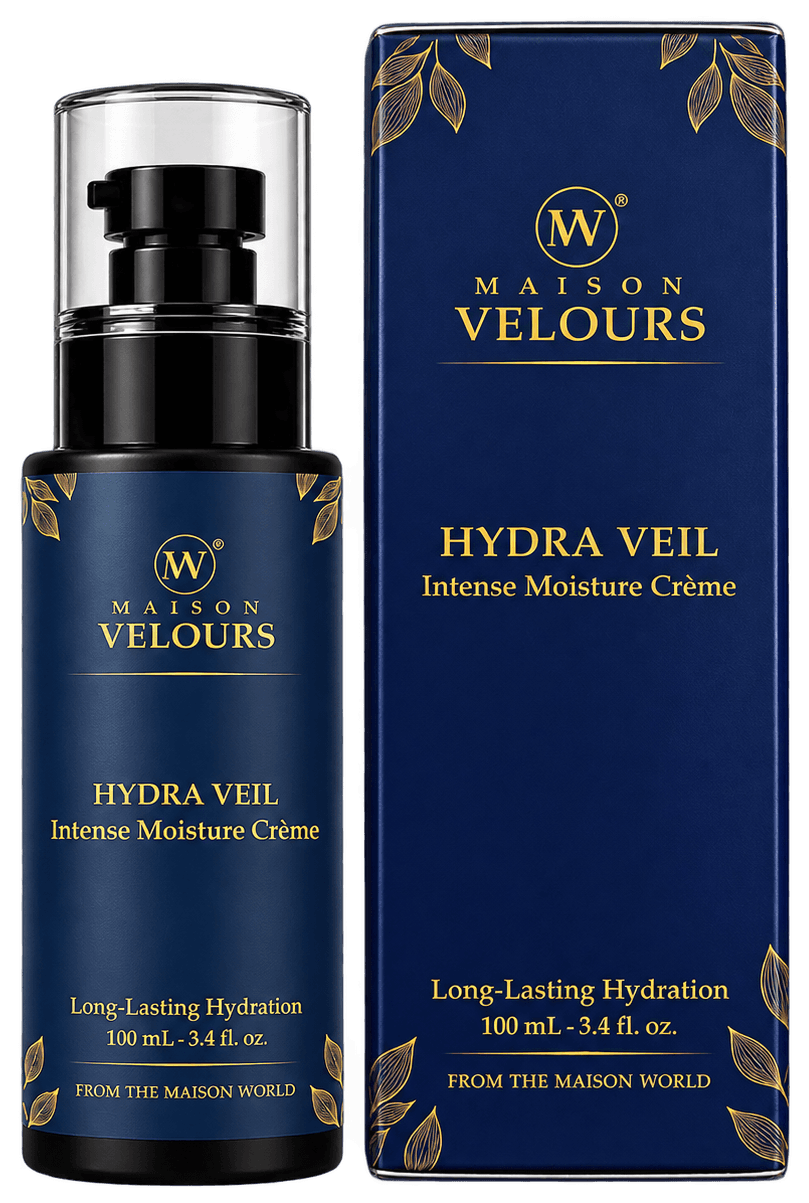
Maison Velours builds Hydra Veil around hyaluronic acid for this brief — lightweight hydration formulated for Indian skin and humidity rather than a temperate winter — and it layers naturally under Solar Guard and alongside Radiance Lumière. Every product carries mandatory Indian statutory information, including manufacturer details, MRP inclusive of GST, and batch and expiry where applicable.
Frequently asked
- How do you use hyaluronic acid on Indian skin?
- Apply it to damp skin after cleansing and immediately seal with a moisturiser to lock the water in. In humid months keep the moisturiser light; in dry heat or winter use something richer. Applied to dry skin with nothing over it, hyaluronic acid can pull moisture out and leave skin drier.
- Can hyaluronic acid dry out your skin?
- Yes, if used wrongly. As a humectant it draws water from wherever it can, so in dry air with no moisturiser to seal it, it can pull moisture from deeper skin and let it evaporate. Always apply to damp skin and lock it in with a moisturiser on top.
- Is hyaluronic acid good for oily skin?
- Yes. Oily skin is often dehydrated, and hyaluronic acid adds water without oil or heaviness. Correcting that dehydration can even help reduce the excess oil that skin produces when it is stripped, making it a good fit for oily and acne-prone skin in humid climates.
- When should I apply hyaluronic acid in my routine?
- Use it as an early hydration step, on damp skin right after cleansing, before your moisturiser and sunscreen. It also layers well under or alongside actives like vitamin C and retinoids, where it cushions the skin and reduces irritation.