Maison Velours · Skincare
Vitamin C Serum for Pigmentation: A Guide for Indian Skin
Vitamin C is the most recommended brightening active — and the most misused. A house guide to how it fades pigmentation, when to use it, and what it needs alongside.
By Sadhana Ojha · Founder, The Maison World · 6 min read · Updated September 2026
Yes — a well-formulated vitamin C serum does fade pigmentation on Indian skin, gradually. It works by interrupting excess melanin production and neutralising sun-driven free radicals; expect several weeks of consistent morning use, always behind sunscreen, before tone visibly evens.
But vitamin C is also one of the most misused actives, undone by the wrong expectations, the wrong pairing, or no sunscreen behind it. This is a house guide from Maison Velours to using a vitamin C serum properly on Indian skin.
How does vitamin C help with pigmentation?
Vitamin C brightens by interrupting excess melanin production and neutralising the free radicals that sun exposure generates in the skin. Over consistent use it helps fade existing dark marks and evens overall tone, which is why it is the go-to active for the post-inflammatory hyperpigmentation that melanin-rich skin is especially prone to.
It is a gradual brightener, not an overnight one. Realistic timelines run to several weeks of daily use before a visible shift in tone, and its job is as much prevention as correction — it blunts the daily oxidative damage that would otherwise deepen pigmentation in the first place.
What strength of vitamin C serum should you use?
A moderate concentration used consistently beats a high one used cautiously. Well-formulated serums in the roughly 10–15% range deliver meaningful brightening while staying tolerable, whereas very high strengths can irritate — and in melanin-rich skin, irritation risks triggering the very pigmentation you are trying to clear.
If your skin is sensitive, begin lower and less often, then build up. Gentler vitamin C derivatives are a good entry point for reactive skin; the goal is a strength you can use daily without stinging, because consistency, not intensity, is what fades pigmentation.
When should you apply vitamin C — morning or night?
Morning is the classic choice, because vitamin C’s antioxidant action complements sunscreen and defends the skin against the day’s UV and pollution. Applied to clean skin before moisturiser and SPF, it adds a layer of protection on top of fading existing marks.
It can be used at night too, and some routines split actives across the day. The non-negotiable is what follows it in the morning: without daily sun protection, fresh UV re-darkens skin faster than any serum can lighten it, so vitamin C without sunscreen is effort largely wasted.
What should you not mix with vitamin C?
Avoid stacking vitamin C with other strong actives in the same routine when you are starting out. Layering it directly with high-strength exfoliating acids or with retinol can overwhelm the skin barrier and provoke irritation — and again, in melanin-rich skin, irritation is a direct route to more pigmentation.
A calmer approach is to separate them: vitamin C in the morning, a retinoid or acid at night, introduced one at a time. This gives each active room to work and keeps the barrier calm, which is what actually protects even tone over the long run. For where each step sits, see the correct order to layer skincare; for the other major brightening route, read our guide to glutathione for skin brightening.
How do you build vitamin C into an Indian routine?
Keep the core short and repeatable: a gentle cleanser, a vitamin C serum in the morning, a moisturiser matched to the season, and daily broad-spectrum sunscreen over the top. That foursome addresses pigmentation more effectively than a crowded shelf of competing actives.
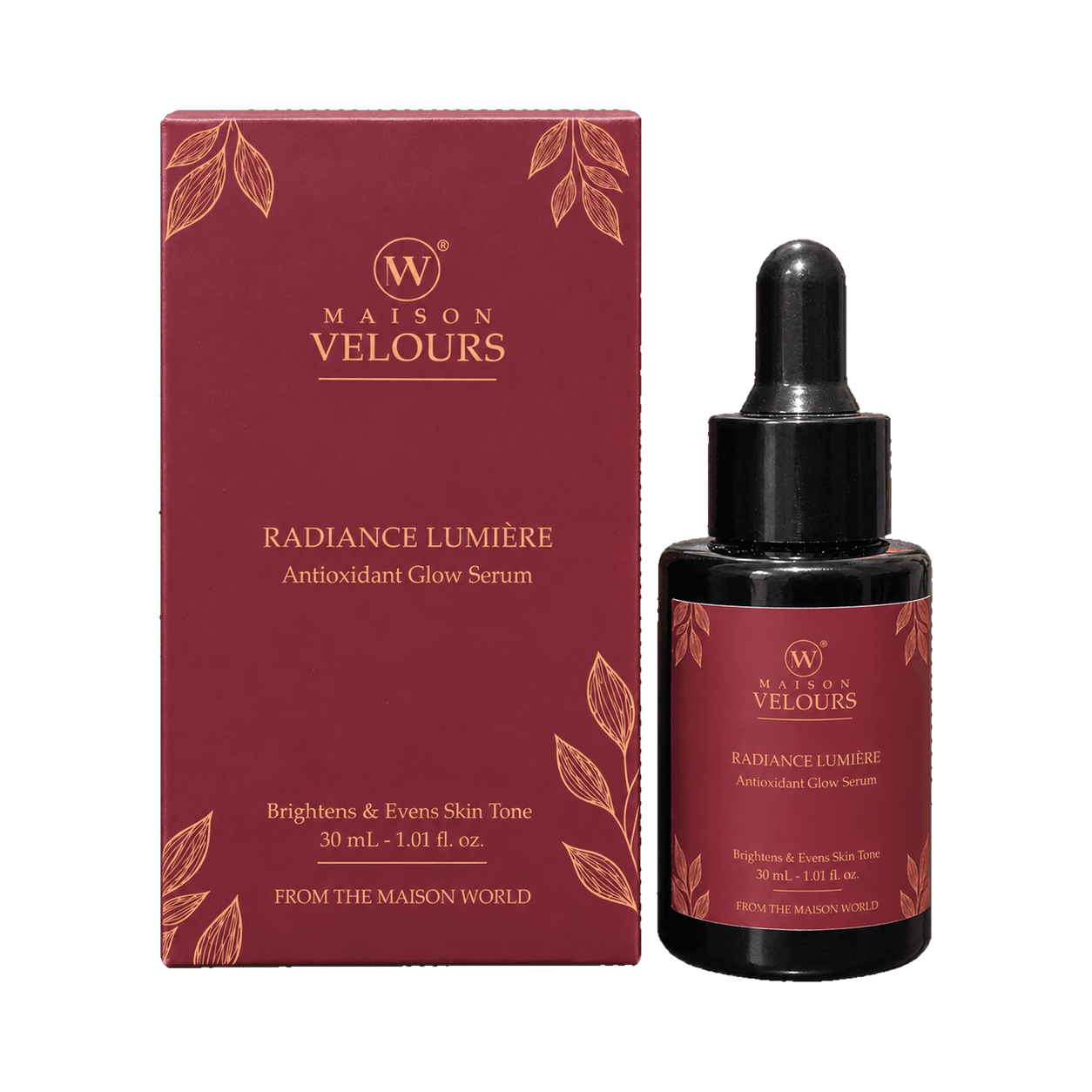
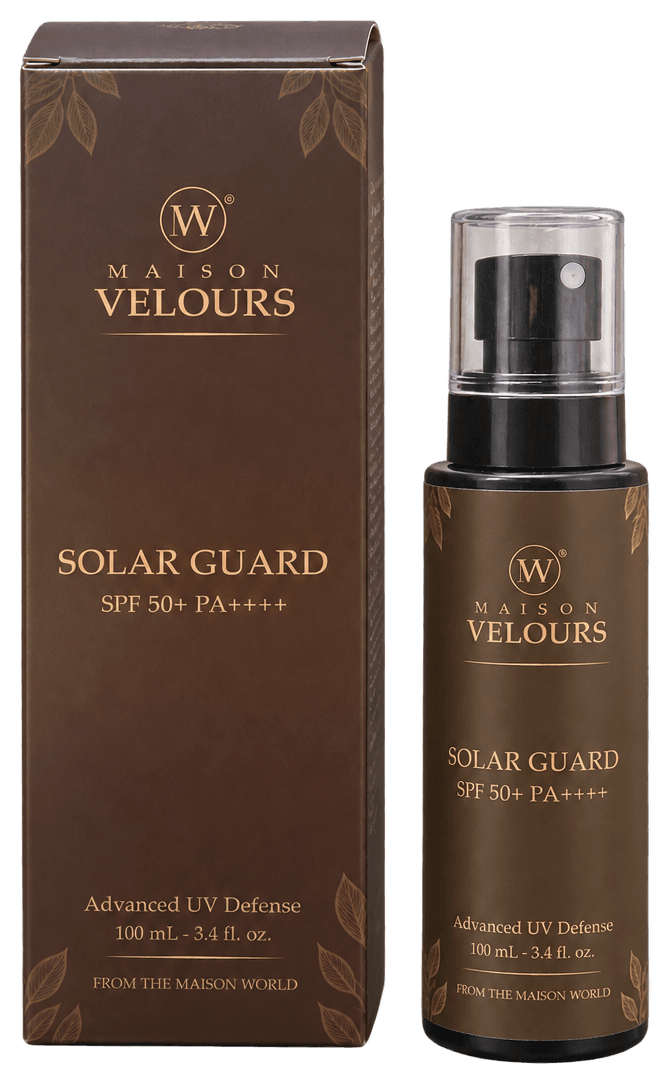
Maison Velours formulates Radiance Lumière as a vitamin C glow serum for this exact brief — brightening built for Indian skin and climate rather than adapted from a temperate-market original — and pairs naturally with Solar Guard sunscreen, without which any brightening routine underdelivers. Every product carries mandatory Indian statutory information, including manufacturer details, MRP inclusive of GST, and batch and expiry where applicable.
Frequently asked
- Is vitamin C serum good for pigmentation on Indian skin?
- Yes. Vitamin C interrupts excess melanin production and neutralises sun-driven free radicals, which fades dark marks and evens tone — the main concern for melanin-rich Indian skin. It works gradually over weeks and must be paired with daily sunscreen to be effective.
- What percentage of vitamin C is best for beginners?
- A moderate concentration in roughly the 10–15% range, used consistently, gives meaningful brightening while staying tolerable. Sensitive skin should start lower or with a gentler vitamin C derivative and build up, since irritation can trigger more pigmentation in melanin-rich skin.
- Should I use vitamin C in the morning or at night?
- Morning is ideal, as vitamin C’s antioxidant action complements sunscreen and defends against daytime UV and pollution. It can be used at night too, but the key rule is applying daily sun protection in the morning — without it, UV re-darkens skin faster than the serum can lighten it.
- Can I use vitamin C with retinol or acids?
- When starting out, avoid layering vitamin C directly with retinol or strong exfoliating acids, as the combination can irritate the skin barrier and worsen pigmentation in melanin-rich skin. Separate them — vitamin C in the morning, a retinoid or acid at night — and introduce one active at a time.